Chase Rowland knows a thing or two about engaging hard-to-reach people in the community.

As a member of the Emergency Preparedness team during the COVID-19 pandemic, Chase learned that trust and access can be significant barriers to health care—revelations that continue to shape his work.
Now serving as HHF's Community Outreach Coordinator, Chase believes in the impact of meeting people where they are, whether that's at a church, a community center, or a doctor's office.
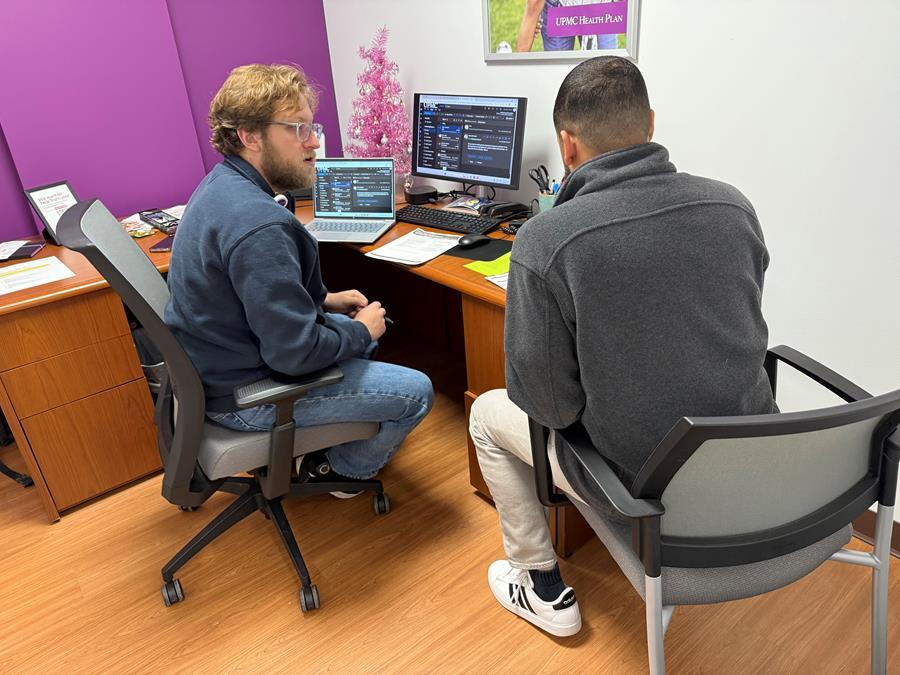
Chase was recently embedded into two downtown primary care practices, where he connects with patients to assess their social determinants of health.
As an added member of the care team, he provides immediate support for critical needs—such as housing, food, and behavioral health care—while also making referrals and connecting patients to longer-term resources, including workforce training and stable housing options.
This approach is made possible through the UPMC Center for High-Value Health Care, a division of UPMC Health Plan. Their research and leadership have helped advance innovative care models, including the integration of a Community Outreach Coordinator directly into primary care offices in Erie.