
Leading the Way in Dizziness Treatment
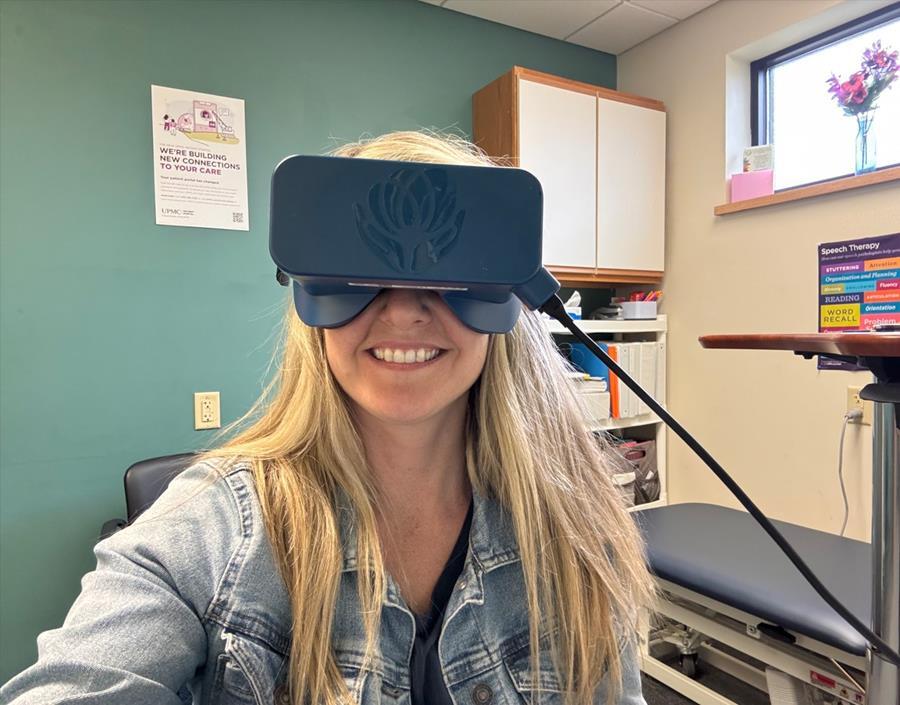
For patients arriving in the UPMC Hamot Emergency Department, dizziness can feel like the floor has dropped out from under them. The room spins, vision blurs, and panic sets in. One of the first priorities for the clinical team is determining whether those symptoms are signs of a stroke—something demanding immediate action—or a vestibular disorder.
What’s a vestibular disorder?
It’s an inner ear issue that causes a range of symptoms, including vertigo, dizziness, loss of balance, and vision problems. It can be disorienting and even terrifying, but it is a relatively quick and painless condition to treat. Simple positional maneuvers guided by a physical therapist often provide near-immediate relief.
The best diagnostic tool for this is infrared vestibular goggles, a high-tech device that tracks tiny, involuntary eye movements to reveal whether dizziness is caused by a vestibular disorder or something more serious.